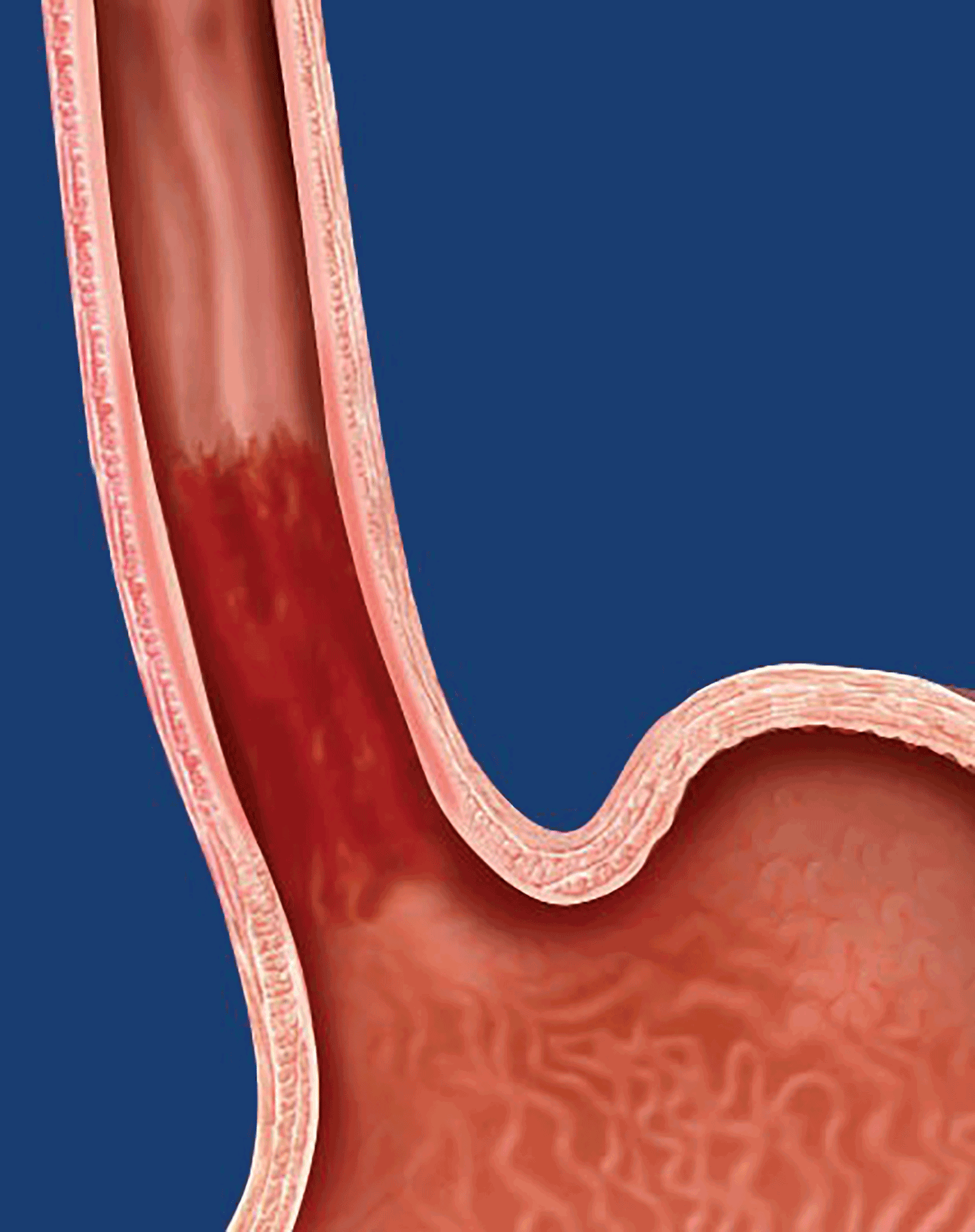
 You’ve heard the commercials: “the acid churning up,” “the little purple pill.” Everywhere you turn, there’s a remedy for gastroesophageal reflux disease (GERD).
And rightly so. GERD is more than just a little discomfort from eating a spicy burrito. If left untreated, it can lead to a condition called Barrett’s esophagus, which is often a precursor to esophageal cancer.
Now, researchers at Brown and Rhode Island Hospital have outlined the signaling pathway from cellular damage by acid to the progression of esophageal cancer. Their work was published in the Journal of Biological Chemistry.
Looking at human cancer cells and biopsies from patients with Barrett’s esophagus, the researchers found that the enzyme NOX5-S is affected by exposure to acid and that it produces stress on cells, activating genes that lead to DNA damage. NOX5-S is significantly higher in Barrett’s esophageal tissues. Acid exposure leads to an increase in calcium in Barrett’s esophageal cancer cells, thus activating a cAMP response element binding protein. This, in turn, causes the activation of NOX5-S and overproduction of reactive oxygen species, increasing cell growth and decreasing cell death—optimal conditions for cancer to develop.
“The role of acid is controversial … Now that we have a better understanding of the signaling pathway, we can possibly identify who is at risk of developing cancer by determining the levels of this enzyme,” says senior author Weibiao Cao, an assistant professor of medicine and surgery and a researcher at the Liver Research Center, Rhode Island Hospital.
Now that the sequence of events is understood, researchers can attempt to slow down or even block the progression of cancer by blocking different steps, providing therapeutic value to patients.
And that’s timely news, since incidences of esophageal cancer related to Barrett’s esophagus have increased over the past three decades at a rate exceeding that of any other cancer in the past 10 years. Patients have a poor prognosis, with a median survival of less than 18 months after diagnosis, and the five-year survival rate is less than 20 percent after surgery on operable tumors.